A manageable language lesson from a YouTube video you enjoy
You do not need to watch a lot for a useful lesson. A short clip, a few memorable sentences and one attempt at saying them yourself are enough to start.
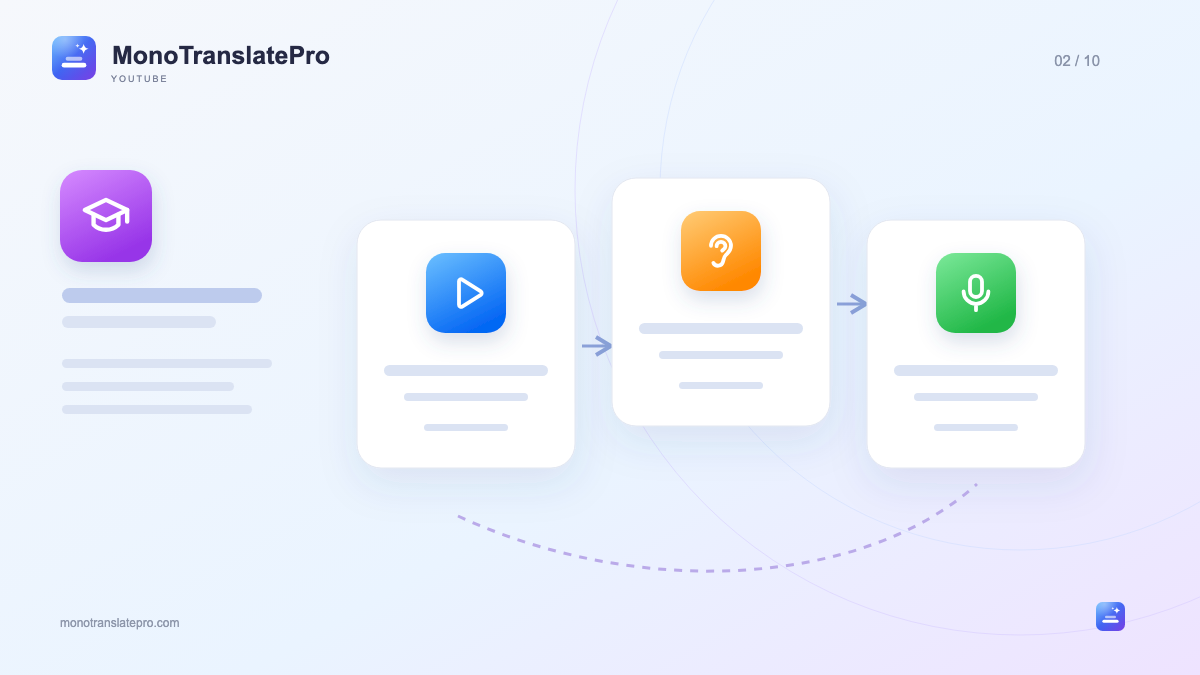
- Choose a short clip with a familiar topic and clear speech.
- Listen first, use subtitles to understand, then try recalling a sentence.
- Use a phrase in your own sentence instead of only copying its translation.
In this article
1. Choose something you actually want to watch
A video about food you enjoy is often easier to follow than an unfamiliar lecture. You already know a little about the topic and have a reason to keep watching. Choose a video with captions, reasonably clear speech and not too many people talking.
2. Listen once and try to catch the main idea
Before reading the translation closely, listen and ask: who is speaking, what do they want and how do they feel? You need not catch every word. Trying to understand first reveals where you need help.
3. Keep a few phrases with their context
Choose two or three phrases you could use in daily life. Instead of writing down only “ready”, keep the whole sentence “Let me know when you’re ready.” The sentence shows who is speaking to whom and when the phrase is used.
Read the translation for meaning, then return to the original. Could you use it when meeting a friend, working in a team or getting ready to leave? If no situation comes to mind, pick a sentence closer to your life.
- Prefer short phrases you can say aloud.
- Keep the sentence or scene so you remember its meaning.
- You do not need to save every new word in the video.
4. Listen again and repeat in your own voice
Replay the exact sentence and repeat it. Notice stress, pauses and connected sounds without trying to copy the speaker’s whole voice. After looking at the original, try saying it without the text to see what you remember.
Once translation finishes, continue in the Mono Learning Map. Echo is where you return to a sentence, listen and repeat. If it is too long, choose a shorter phrase instead of repeating until you lose interest.
5. Make the speaker’s sentence your own
A phrase becomes more useful when you put it into your own idea. “Let me know when you’re ready” could be a message to a friend before a call. Keep the structure you want to learn and change the details.
Connect in the Learning Map encourages you to use a phrase in your own sentence. Do more than replace a noun and copy the rest: consider whether it sounds natural in your chosen situation. If unsure, return to the video and listen to how it is used.
6. Next time, start with what you learned
At your next session, try recalling yesterday’s sentence before revealing it. If you forget, replay the scene and carry on. You are finding a manageable rhythm, so forgetting need not become a mistake to fear.
Keep this in mind
One clip, two phrases and a sentence of your own are a useful beginning. Mono preserves the context; meaningful practice comes from listening again and trying to use what you understood.
The MonoTranslatePro team shares extension guides and ways to learn from real videos.